
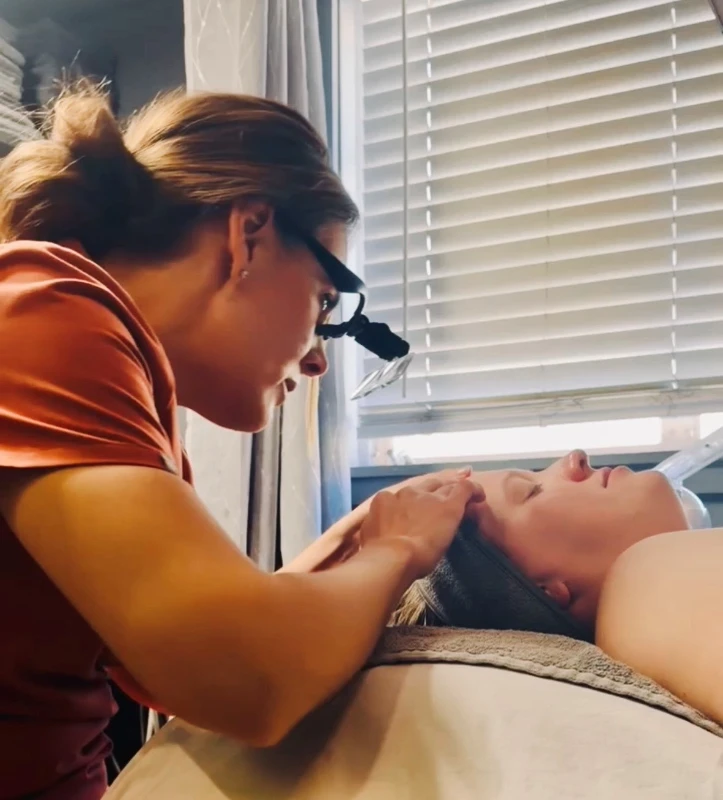
If your skin feels more reactive, red, dry, or easily irritated in Flagstaff, you are not imagining it. Living at high elevation creates a very real set of environmental stressors for the skin barrier, and that matters even more if you already struggle with sensitive skin, rosacea, or chronic dryness.
Flagstaff sits at roughly 6,900 to 7,000 feet above sea level, and higher elevation means stronger ultraviolet exposure because there is less atmosphere filtering UV radiation. EPA guidance notes that UV intensity increases with elevation, and the City of Flagstaff identifies the city’s average elevation at about 6,900 feet.
For skin, that combination can be tough: dry mountain air, cold weather, wind exposure, indoor heating, and stronger UV all work against a healthy barrier. When the barrier is compromised, skin loses water more easily, becomes more inflamed, and often starts reacting to products or treatments that used to feel fine. Research on transepidermal water loss, or TEWL, supports the idea that barrier integrity and environmental conditions are closely connected.
What your skin barrier actually does
Your skin barrier is the outermost protective layer of the skin, often described as a brick-and-mortar structure. The skin cells are the “bricks,” and the lipids between them are the “mortar.” When that structure is healthy, it helps keep moisture in and irritants out.
When it is weakened, the skin has a harder time holding onto hydration and a much easier time becoming inflamed. That is where transepidermal water loss, or TEWL, comes in.
What is TEWL?
TEWL stands for transepidermal water loss. It is a way of measuring how much water passively evaporates through the skin. In simple terms, it helps tell us how well your skin barrier is doing its job.
Higher TEWL generally means the barrier is not functioning as well as it should. TEWL is widely used as an objective indicator of skin barrier integrity, and elevated TEWL is associated with impaired barrier function and inflammatory skin conditions.
That matters in Flagstaff because environmental stress can make your skin lose moisture faster, leaving it tight, flaky, more reactive, and more likely to sting or burn when you apply active products.
Why altitude makes redness and irritation worse
At higher elevation, the skin is often dealing with multiple stressors at the same time.
1. Stronger UV exposure
UV exposure does not only affect sunburn risk. It can also contribute to inflammation, sensitivity, and long-term barrier disruption. At higher altitudes, UV intensity increases because there is less atmosphere to absorb the rays. That means skin in Flagstaff often gets hit harder than skin at lower elevations, even on days that feel cool.
2. Dry air and faster moisture loss
Flagstaff’s mountain climate can leave skin chronically thirsty. Dry air affects hydration and barrier behavior, and TEWL literature shows that environmental conditions can influence how the barrier performs. When the skin is already prone to sensitivity, that moisture loss can quickly show up as tightness, rough texture, redness, and increased reactivity.
3. Wind, cold, and indoor heat
Cold outdoor air, wind exposure, and heated indoor spaces can all worsen dehydration and irritation. That is one reason many people notice that their skin feels more unpredictable in winter or during windy stretches in Northern Arizona. Even a good routine can start falling short if it is not adjusted for the environment.
Why aggressive treatments can backfire at elevation
This is where many people get stuck.
When your skin looks dull, uneven, or inflamed, it is tempting to reach for stronger exfoliants, more frequent acids, harsher acne products, or intensive treatments. But if the barrier is already under strain, aggressive treatments can make things worse instead of better.
That can look like:
- more redness instead of less
- stinging when products are applied
- dry patches that do not go away
- breakouts alongside flaking
- skin that feels both oily and dehydrated
- longer recovery after treatment
If your skin barrier is compromised, the goal is not to force faster results. The goal is to help the skin function better first.
What to do instead: support the barrier first
In a high-altitude climate like Flagstaff, sensitive skin usually responds best to a more strategic approach.
Focus on barrier repair
A barrier-focused treatment plan supports the skin instead of overwhelming it. That often means prioritizing hydration, calming inflammation, and strengthening the outer layer before jumping into anything too aggressive.
This is especially important for clients with:
- sensitive skin
- rosacea-prone skin
- dry or dehydrated skin
- skin that stings easily
- redness that seems to flare seasonally
- irritation from active products
Choose treatments that respect the environment
Not every facial or advanced treatment should be done the same way in every climate. What works at lower elevation may need to be adjusted in Flagstaff.
That is why a more thoughtful, skin-first approach matters here. Treatment protocols should take into account:
- your current barrier condition
- how reactive your skin is
- how much inflammation is already present
- how dry the environment is
- whether your skin can actually recover well afterward
Use gentle microchanneling protocols when appropriate
Microchanneling can be a great option, but only when it is done thoughtfully and with the skin barrier in mind. For sensitive or compromised skin, gentler protocols are often the better choice, especially in a dry, high-UV climate where recovery can be more delicate.
Instead of treating the skin aggressively, the goal should be to support healthy renewal while minimizing unnecessary inflammation.
The importance of professional grade versus over-the-counter products
What you use at home is just as important as what is done in the treatment room, especially in a high-altitude environment like Flagstaff. Professional-grade products are formulated with higher-quality ingredients, more effective delivery systems, and concentrations that are designed to actually support barrier function, not just sit on the surface of the skin.
Over-the-counter products can be helpful, but many are diluted, overly fragranced, or not designed with compromised or sensitive skin in mind, which can unintentionally contribute to irritation or increased transepidermal water loss. When your barrier is already under stress from dry air, UV exposure, and environmental factors, using the right home care is crucial for maintaining results, reducing inflammation, and keeping the skin strong between treatments.
The takeaway for Flagstaff skin
If your skin has been feeling more reactive since living in Flagstaff, the environment may be a bigger factor than you realize. High altitude, stronger UV exposure, dry air, and seasonal stress can all contribute to a weaker skin barrier and increased transepidermal water loss.
The good news is that skin does not always need stronger treatment. Often, it needs smarter treatment.
When the barrier is supported first, skin tends to become calmer, more resilient, and more able to respond well to advanced services over time.
Ready for a barrier-focused approach?
If your skin is feeling dry, red, reactive, or easily irritated in Flagstaff’s climate, a barrier-repair focused facial may be the best place to start. And for clients who want advanced results without overwhelming sensitive skin, gentle microchanneling protocols can offer a more supportive path forward.
Book a treatment designed for sensitive skin in Flagstaff and give your skin the support it actually needs in a high-altitude environment.

One Response